

In recent years, the medical textile industry has witnessed a growing demand for sustainable and eco - friendly materials. As a supplier of Eco Friendly Lyocell Yarn, I am often asked whether our product can be used for making medical textiles. In this blog post, I will explore the potential of eco - friendly lyocell yarn in the medical textile field from various aspects.
Properties of Eco - Friendly Lyocell Yarn
Lyocell is a type of regenerated cellulose fiber. It is produced through an environmentally friendly process, which uses a closed - loop system where the solvent is recycled, resulting in minimal waste and pollution. This makes Lyocell Yarn an excellent choice for those seeking sustainable materials.
One of the key properties of lyocell is its high absorbency. It can absorb up to 50% more moisture than cotton, which is crucial in medical applications. In medical textiles, such as wound dressings, high absorbency helps to keep the wound area dry, reducing the risk of infection and promoting faster healing. The ability to wick away moisture also makes lyocell comfortable to wear for patients, especially in long - term applications like hospital gowns.
Another important characteristic is its softness. Lyocell has a smooth and silky texture, which is gentle on the skin. This is especially beneficial for patients with sensitive skin or those who are bedridden for extended periods. Rough or irritating materials can cause skin irritation and pressure sores, but the softness of lyocell can help prevent these issues.
Lyocell also has good strength, both when dry and wet. This means that medical textiles made from lyocell yarn can maintain their integrity during use, whether they are being laundered or in contact with bodily fluids. In addition, lyocell fibers have a high tenacity, which allows them to withstand mechanical stress without breaking easily. This property is essential for medical products that need to be durable, such as surgical sponges or bandages.
Current Applications in the Medical Field
Although the use of lyocell in medical textiles is still developing, there are already some successful applications. For example, in wound care, lyocell - based dressings are becoming increasingly popular. These dressings can effectively absorb wound exudate while maintaining a moist wound environment, which is conducive to cell proliferation and tissue repair.
Moreover, lyocell fibers can be engineered to have antimicrobial properties. By incorporating certain agents during the production process, Lyocell Filament Yarn can be made to inhibit the growth of bacteria and fungi. This is a significant advantage in medical settings, where preventing infections is of utmost importance. Antimicrobial lyocell textiles can be used in surgical drapes, masks, and other protective gear.
Comparison with Traditional Medical Textile Materials
When compared with traditional materials like cotton and polyester, eco - friendly lyocell yarn has several advantages. Cotton is a widely used material in medical textiles, but it has a relatively low absorbency compared to lyocell. Additionally, cotton farming often requires large amounts of water and pesticides, which are not environmentally friendly.
On the other hand, polyester is a synthetic fiber known for its durability. However, most polyester is derived from non - renewable petrochemicals, and its production process is energy - intensive and generates a significant amount of pollution. In contrast, Reclaimed Polyester Yarn or 100 Recycled Polyester Yarn can be more sustainable options, but they may still lack some of the natural properties of lyocell, such as softness and high absorbency.
Challenges and Solutions
While eco - friendly lyocell yarn has great potential in medical textiles, there are also some challenges that need to be addressed. One of the main challenges is the cost. The production process of lyocell is more complex than that of some traditional fibers, which can result in higher prices. However, as the demand for sustainable materials increases and production technology improves, the cost is expected to decrease gradually.
Another challenge is the need for further research and development. Although there is already some evidence of the effectiveness of lyocell in medical applications, more studies are needed to fully understand its performance under different conditions. For example, more research could be done on the long - term effects of lyocell - based medical textiles on wound healing and patient comfort.
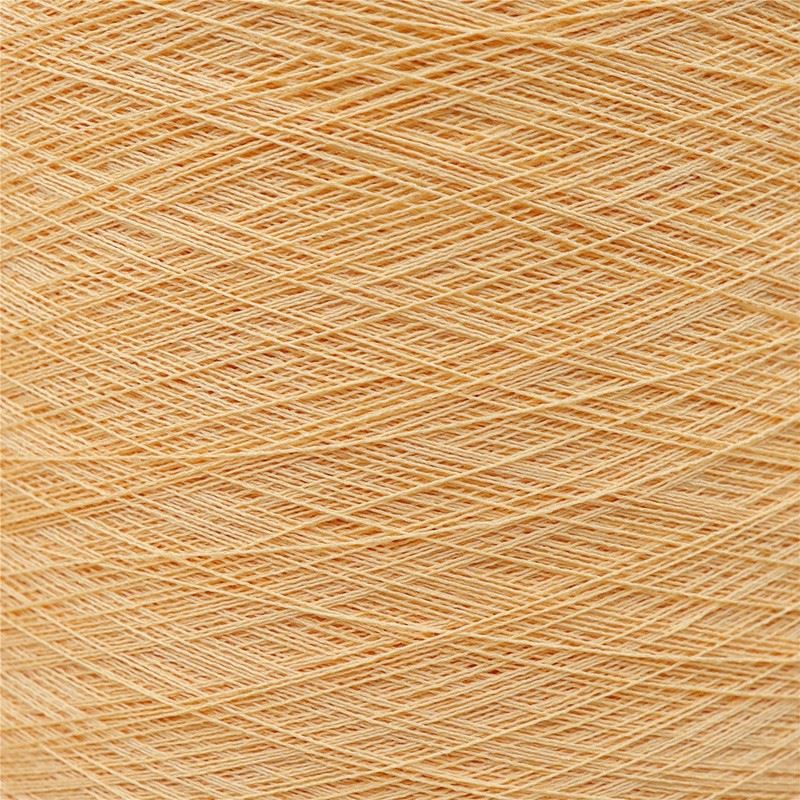

To overcome these challenges, as a supplier, we are constantly working on improving our production processes to reduce costs. We are also collaborating with research institutions and medical professionals to conduct more in - depth studies on the application of our Eco Friendly Lyocell Yarn in medical textiles.
Future Prospects
The future of using eco - friendly lyocell yarn in medical textiles looks promising. With the increasing awareness of environmental protection and the need for high - quality medical products, the demand for sustainable materials in the medical field is expected to grow. Lyocell, with its excellent properties and eco - friendly production process, is well - positioned to meet this demand.
In addition, technological advancements may further enhance the performance of lyocell - based medical textiles. For example, new finishing techniques could be developed to improve the antimicrobial and anti - inflammatory properties of lyocell, making it even more suitable for medical applications.
Contact for Purchase and Collaboration
If you are interested in exploring the potential of Eco Friendly Lyocell Yarn for your medical textile needs, I encourage you to reach out. We are committed to providing high - quality products and excellent customer service. Whether you are a manufacturer of medical textiles, a researcher in the medical field, or a distributor looking for sustainable products, we would be delighted to discuss your requirements and work with you.
References
- "Handbook of Fibre Chemistry", Third Edition, edited by Mark Lewin.
- "Medical Textiles and Biomaterials for Healthcare", edited by S. J. Russell.
- Research papers on the applications of lyocell in medical textiles published in various scientific journals.