

As a supplier of Nylon Blend Yarn, I often encounter inquiries about the elasticity recovery rate of our product. This is a crucial characteristic that significantly impacts the performance and application of the yarn. In this blog, I will delve into what the elasticity recovery rate of Nylon Blend Yarn is, its influencing factors, and its importance in various industries.
Understanding the Elasticity Recovery Rate
The elasticity recovery rate refers to the ability of a material to return to its original shape after being stretched or deformed. In the context of Nylon Blend Yarn, it measures how well the yarn can regain its initial length and structure after being subjected to a certain amount of tension. This property is typically expressed as a percentage. For example, if a yarn has an elasticity recovery rate of 90%, it means that after being stretched, it can return to 90% of its original length.
The elasticity of Nylon Blend Yarn is primarily due to the nature of nylon itself. Nylon is a synthetic polymer known for its high strength and excellent elastic properties. When blended with other fibers, such as cotton, wool, or polyester, the resulting Nylon Blend Yarn inherits some of these elastic characteristics while also incorporating the unique properties of the other fibers.
Factors Affecting the Elasticity Recovery Rate
Several factors can influence the elasticity recovery rate of Nylon Blend Yarn. Understanding these factors is essential for producing high - quality yarn with consistent elastic performance.
Fiber Composition
The proportion of nylon in the blend is a key factor. Generally, a higher percentage of nylon will result in a higher elasticity recovery rate. For instance, a blend with 70% nylon and 30% cotton is likely to have better elastic recovery than a blend with 30% nylon and 70% cotton. However, other fibers can also contribute to the overall performance. For example, wool can add softness and warmth, while polyester can enhance durability.
Manufacturing Process
The way the yarn is manufactured also plays a significant role. The spinning process, including the twist level and the tension applied during spinning, can affect the elasticity of the yarn. A higher twist level can sometimes increase the strength and elasticity of the yarn, but it may also reduce its softness. Additionally, heat - setting treatments can be used to improve the elasticity recovery rate by stabilizing the molecular structure of the nylon.
Environmental Conditions
Environmental factors such as temperature and humidity can impact the elasticity recovery rate. Nylon is sensitive to temperature changes, and high temperatures can cause the yarn to lose some of its elastic properties. Humidity can also affect the yarn's performance, as moisture can cause the fibers to swell and change their mechanical properties.
Importance of Elasticity Recovery Rate in Different Industries
The elasticity recovery rate of Nylon Blend Yarn makes it suitable for a wide range of applications in various industries.
Textile Industry
In the textile industry, Nylon Blend Yarn is commonly used in the production of clothing, especially sportswear and activewear. The high elasticity recovery rate allows the fabric to stretch and move with the body, providing comfort and freedom of movement. For example, leggings made from Nylon Blend Yarn can maintain their shape even after repeated stretching during exercise. It is also used in hosiery, where the elastic recovery ensures a snug fit and prevents sagging.
Automotive Industry
In the automotive industry, Nylon Blend Yarn is used in seat covers and interior trim. The elasticity recovery rate helps the fabric to conform to the shape of the seats and withstand the wear and tear caused by regular use. This ensures that the interior of the vehicle looks new and well - maintained for a longer period.
Home Textiles
For home textiles such as curtains, upholstery, and bedding, the elasticity recovery rate of Nylon Blend Yarn is important for maintaining the appearance and functionality of the products. Curtains made from this yarn can easily return to their original shape after being opened and closed, while upholstery can resist wrinkling and retain its smooth surface.
Comparing with Other Blended Yarns
When considering different types of blended yarns, the elasticity recovery rate of Nylon Blend Yarn sets it apart from some of its counterparts. For example, Cashmere And Silk Blend Yarn is known for its softness and luxury, but it may not have the same level of elasticity recovery as Nylon Blend Yarn. Cashmere and silk are more delicate fibers, and while they can provide a smooth and elegant feel, they may not be as suitable for applications that require high - stretch and recovery.
Linen Silk Blend Yarn offers a combination of the natural breathability of linen and the luster of silk. However, linen has relatively low elasticity, which can limit the overall elasticity recovery rate of the blend. In contrast, Nylon Blend Yarn can provide a better balance between elasticity and other desirable properties.

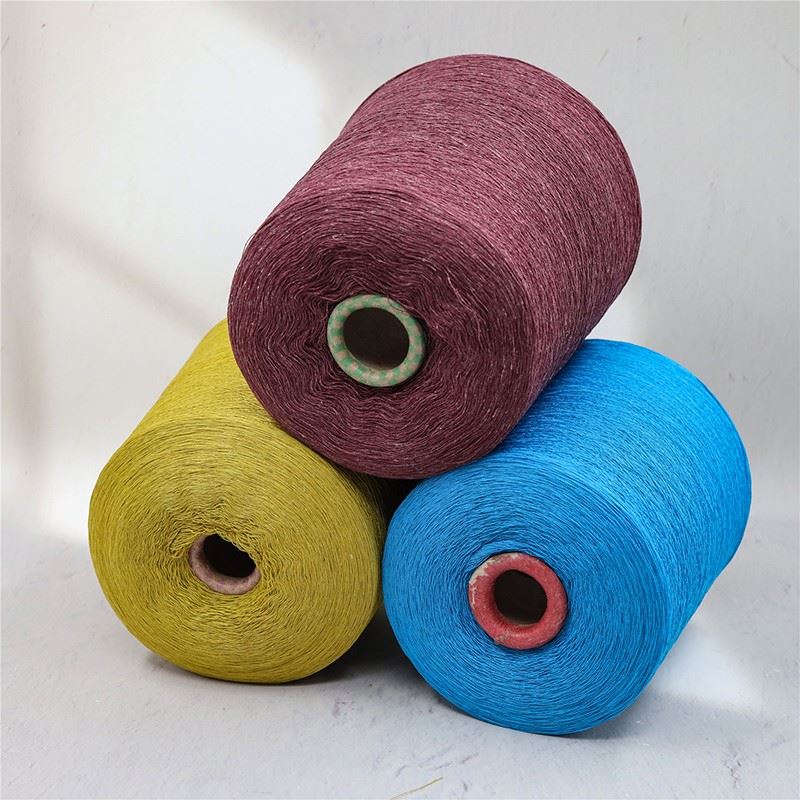
Hemp Mixed Yarn and Hemp Blend Yarn are popular for their eco - friendly and durable characteristics. Hemp fibers are strong but have limited elasticity. By blending with nylon, the resulting yarn can gain improved elasticity recovery while still retaining the benefits of hemp.
Recycled Polyester Yarn is a sustainable option, but it may not offer the same level of elasticity as Nylon Blend Yarn. Polyester has some elastic properties, but nylon generally provides a higher degree of stretch and recovery.
Measuring the Elasticity Recovery Rate
There are several methods to measure the elasticity recovery rate of Nylon Blend Yarn. One common method is the tensile test. In this test, a sample of the yarn is clamped at both ends and gradually stretched to a certain length. The force applied during stretching is recorded, and then the yarn is released. After a specific period, the length of the yarn is measured again, and the elasticity recovery rate is calculated based on the difference between the stretched length and the final length.
Another method is the cyclic loading test, where the yarn is subjected to multiple cycles of stretching and relaxation. This test can simulate the real - world conditions of the yarn's use and provide a more accurate assessment of its long - term elasticity recovery performance.
Maintaining the Elasticity Recovery Rate
To ensure that the Nylon Blend Yarn maintains its elasticity recovery rate over time, proper care is necessary. When using products made from this yarn, it is important to follow the care instructions provided. For example, avoid using harsh chemicals or high - temperature washing, as these can damage the nylon fibers and reduce the elasticity.
In storage, it is advisable to keep the yarn in a cool and dry place. Exposure to excessive heat or humidity can cause the fibers to degrade and affect the elasticity recovery rate.
Conclusion
The elasticity recovery rate of Nylon Blend Yarn is a vital property that determines its performance and suitability for various applications. As a supplier, we are committed to producing high - quality Nylon Blend Yarn with consistent and excellent elasticity recovery. Whether you are in the textile, automotive, or home textile industry, our Nylon Blend Yarn can meet your specific requirements.
If you are interested in purchasing our Nylon Blend Yarn or have any questions about its properties and applications, please feel free to contact us for further discussion. We look forward to collaborating with you and providing the best solutions for your business.
References
- ASTM D2256 - 10(2019) Standard Test Method for Tensile Properties of Yarns by the Single - Strand Method.
- ISO 2062:2018 Textiles — Yarns from packages — Determination of linear density (mass per unit length).